Fosaprepitant Dimeglumine Injection, Powder, Lyophilized, For Solution
Product Images NDC 0143-9384

View Photos of Packaging, Regulatory Labels, and Product Appearance

Product Visual Gallery

This gallery contains 3 technical images submitted to the FDA as part of the official labeling for Fosaprepitant Dimeglumine (NDC 0143-9384). Unlike standard consumer photos, these assets often include clinical data figures, molecular chemical structures, and official manufacturer packaging layouts.

As provided by Hikma Pharmaceuticals Usa Inc., these visuals offer a comprehensive scientific overview of the product's physical and chemical identity, aiding pharmacists and researchers in product verification and study.

FDA Label Image

Chemical Structure (Fosaprepitant For Injection 1)

FDA Label Image

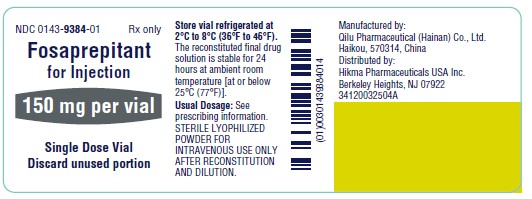
Label (Fosaprepitant For Injection 2)

Label (Fosaprepitant For Injection 2)
This is a medication label that provides information about Fosaprepitant Injection used as an antiemetic drug. The label contains the name and addresses of the manufacturer and distributor of the drug. It mentions that the drug is administered via injection and provides instructions for use, including caution to discard unused portions.*
FDA Label Image

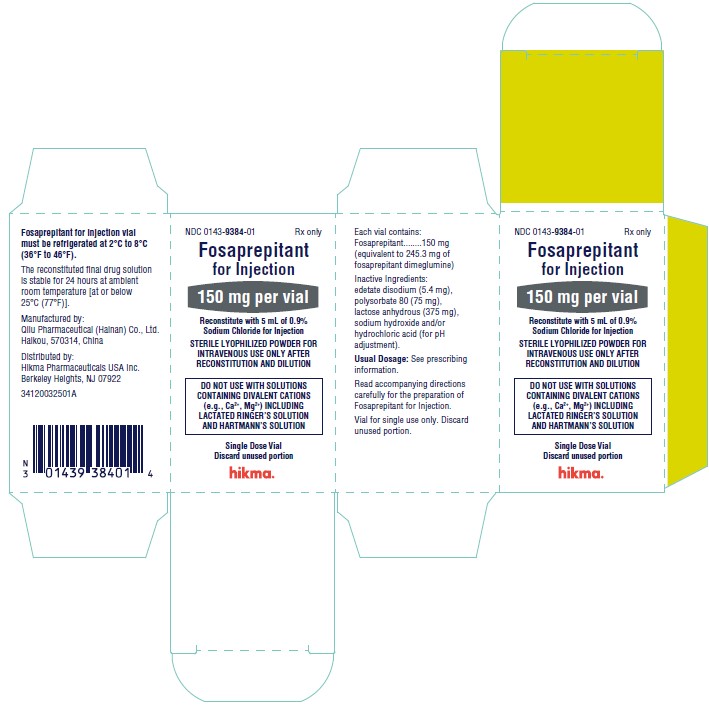
Carton (Fosaprepitant For Injection 3)

Carton (Fosaprepitant For Injection 3)
Fosaprepitant is a lyophilized powder for intravenous use only. Each vial contains 150mg of Fosaprepitant. It should be stored at 2-8°C and can be kept at room temperature for 24 hours when reconstituted with a diluent solution. The powder must not be used without reconstitution and must not be used with saline solutions. The reconstituted solution may contain lactated Ringer's solution and dextrose, so careful evaluation must be done before administration. The product should be used promptly, and any unused portion should be discarded. It is used for nausea and vomiting prevention. Detailed instructions on proper usage must be followed, as per the prescribing physician's direction.*

* These product label images have been analyzed using experimental machine learning. Please verify findings with the primary label text.