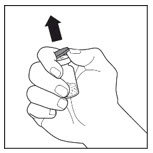
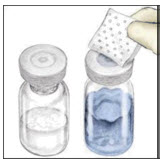
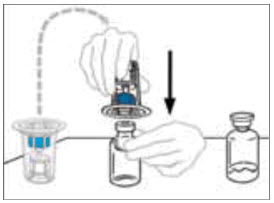
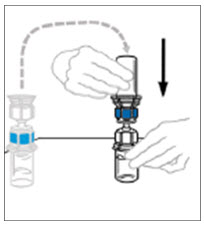
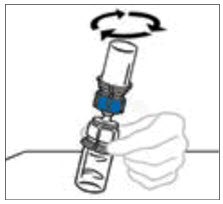
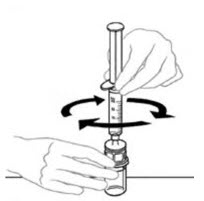
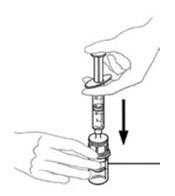
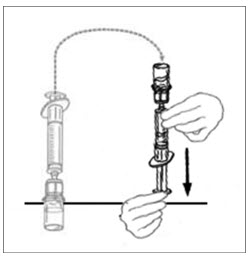
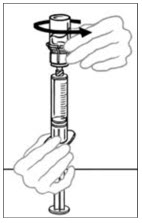
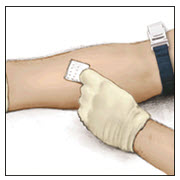
- 8.If tachycardia occurs, the injection speed must be reduced or the administration must be interrupted.
- 9.Dispose of any unused product or waste material in accordance with local requirements.
Risk Summary
Adequate and well-controlled studies with VONVENDI have not been conducted in pregnant women. Animal developmental and reproductive toxicity studies have not been conducted with VONVENDI. It is not known whether VONVENDI can cause fetal harm when administered to a pregnant woman or whether it can affect reproduction capacity.
The background risk of major birth defects and miscarriage in the indicated population is unknown; however, in the US population, the estimated background risk of major birth defects and miscarriage is 2 to 4% and 15 to 20%, respectively.
The efficacy of VONVENDI was evaluated in Study 1 (NCT00816660), Study 2 (NCT01410227), Study 3 (NCT02932618), Study 4 (NCT02283268), Study 5 (NCT02973087), and Study 6 (NCT03879135), as described below.
Study 1
This was a multicenter, single-blind, randomized, controlled, dose escalation study to evaluate the pharmacokinetics (PK), safety and tolerability of VONVENDI in patients with severe von Willebrand disease (VWD). The study enrolled patients with type 3 or severe type 1 VWD (VWF:RCo ≤10% and FVIII<20%), and who had a history of ≥25 days of exposure to VWF/FVIII factor concentrates.
A total of 31 patients received a single infusion of VONVENDI and rFVIII in a ratio of 1.3:1. VONVENDI was administered at a dose of either 2, 7.5, 20, or 50 IU/kg. The major outcome measures were PK parameters as described in section 12 above [see Clinical Pharmacology (12.3)].
On-Demand Treatment and Control of Bleeding Episodes
Study 2 (Adults)
Hemostatic efficacy of VONVENDI was assessed in a multicenter, open-label trial investigating different dosing strategies with and without rFVIII (ADVATE) for on-demand treatment and control of bleeding episodes in adults diagnosed with von Willebrand disease. The study enrolled 37 patients who received treatment for on-demand treatment and control of bleeding episodes.
The demographic of the population were as follows: median age of 37 years (range 18 to 64), 20 patients (54%) were female, 32 patients (86%) were White, 5 patients (14%) were Asian and 2 patients (5%) were of Hispanic or Latino ethnicity. The types of VWD were as follows: Type 1 (n=2; 5%), Type 2A (n=5; 14%), Type 2N (n=1; 3%). and Type 3 (n=29; 78%).
Bleeding episodes were treated initially with an infusion of VONVENDI and ADVATE at a ratio of 1.3:1 respectively (i.e., 30% more VONVENDI than ADVATE), and subsequently with VONVENDI with or without ADVATE. ADVATE was given based on FVIII:C levels with a goal to achieve target plasma levels of greater than 40 IU/dL (40%) of FVIII:C.
A total of 192 bleeding episodes were treated with VONVENDI in 22/37 adult patients. The median cumulative dose of VONVENDI administered per bleeding episode (with or without ADVATE) was 48.2 IU/kg (90% CI, 43.9 to 50.2) IU/kg. The median number of VONVENDI infusions was 2 for major/severe (range: 1 to 3), 1 for moderate (range: 1 to 4), and 1 for minor bleeding episodes (range: 1 to 3). The median cumulative dose based on bleeding severity was 100 IU/kg (range, 57.5 to 135 IU/kg) for major (n=7), 52.7 IU/kg (range, 23.8 to 184.9 IU/kg) for moderate (n=61), and 43.3 IU/kg (range: 25.2 to 158.2 IU/kg) for minor bleeding episodes (n=122).
The primary efficacy endpoint was the number of patients with treatment success for control of bleeding episodes. Treatment success was defined as a mean efficacy rating score of less than 2.5 for all bleeding episodes treated with VONVENDI (with or without ADVATE) during the trial period, using a pre-specified 4-point rating scale comparing the prospectively estimated number of infusions needed to treat the bleeding episodes as assessed by the investigator to the actual number of infusions administered. The definitions for each of the 4-point rating scales are provided in Table 10.
Table 10: Definitions of 4-Point Rating Scales| Rating | Minor and Moderate Bleeding Events | Major Bleeding Events |
|---|
Excellent
(= 1) | Actual number of infusions ≤ estimated number of infusions required to treat that bleeding episode.
No additional VWF coagulation factor containing product required. | Actual number of infusions ≤ estimated number of infusions required to treat that bleeding episode.
No additional VWF coagulation factor containing product required. |
Good
(= 2) | 1 to 2 infusions greater than estimated required to control that bleeding episode.
No additional VWF coagulation factor containing product required. | <1.5x infusions greater than estimated required to control that bleeding episode.
No additional VWF coagulation factor containing product required. |
Moderate
(= 3) | 3 or more infusions greater than estimated used to control that bleeding event.
No additional VWF coagulation factor containing product required. | ≥1.5x more infusions greater than estimated used to control that bleeding event.
No additional VWF coagulation factor containing product required. |
None
(= 4) | Severe uncontrolled bleeding or intensity of bleeding not changed.
Additional VWF coagulation factor containing product required. | Severe uncontrolled bleeding or intensity of bleeding not changed.
Additional VWF coagulation factor containing product required. |
Secondary efficacy measures were the number of treated bleeding episodes with an efficacy rating of “excellent” or “good”, the number of infusions and number of units of VONVENDI, administered with or without ADVATE, per bleeding episode.
The primary efficacy assessment excluded patients with GI bleeds (n=2), and patients in whom the number of infusions required per bleeding episode was estimated retrospectively (n=2). The rate of patients (n=18) with treatment success was 100% (95% CI, 81.5 to 100). Sensitivity analyses of treatment success for bleeding episodes including GI bleeds and those bleeding episodes for which the investigator had to make retrospective assessment of the number of infusions required (n=22: 17 with type 3 VWD, 4 with type 2A VWD and 1 with type 2N VWD) confirmed the primary analysis, with a 100% treatment success rate for each scenario.
All bleeding episodes treated with VONVENDI and ADVATE or VONVENDI alone received an efficacy rating of excellent (97%) or good (3%). This was consistent across all degrees of severity.
Table 11 summarizes data obtained for number of infusions and efficacy rating per bleeding episode by location. Bleeding episodes of “Other” location (n=37) are not included in the table.
Table 11: Efficacy by Bleeding Episode Location (Adults)| Bleeding Episodes by Location (n) A single bleeding episode may occur and be counted in multiple locations | Median Number of Infusions (Range) | Rating (%) |
|---|
| Joint (n=59) | 1 (1 to 3) | Excellent (97%)
Good (3%) |
| GI (n=6) | 1 (1 to 2) | Excellent (83%)
Good (17%) |
| Mucosal: Genital Tract Female (n=32) | 1 (1 to 2) | Excellent (97%)
Good (3%) |
| Mucosal: Nasopharyngeal (n=42) | 1 (1 to 2) | Excellent (98%)
Good (2%) |
| Mucosal: Mouth and Oral Cavity (n=26) | 1 (1 to 4) | Excellent (100%)
Good (0%) |
Study 3 (Pediatrics)
Hemostatic efficacy of VONVENDI with or without ADVATE for on-demand treatment of non-surgical bleeding episodes was assessed in a multicenter, open-label trial in pediatric patients diagnosed with severe VWD. The study enrolled 18 patients who received treatment for on-demand bleeding episodes, including 3 patients who were 17 years old. The patients were followed for a duration of at least 12 months.
The demographics of the population were as follows: the median age was 11 years (range 1 to 17 years), 11 patients (61%) were female, 15 patients (94%) were White, 1 patient (6%) was of multiple races, and 1 patient (6%) was Hispanic or Latino. The types of VWD were as follows: Type 1 (n=2; 11%), Type 2A (n=3; 17%), Type 2B (n=2; 11%), and Type 3 (n=11; 61%).
A total of 28 bleeding episodes in 7 patients were treated with an initial dose of 40 to 60 IU/kg VONVENDI (median dose of 48 IU/kg; range 18 to 63 IU/kg) along with 30 to 45 IU/kg ADVATE (median dose of 33 IU/kg; range 9 to 45 IU/kg). A total of 76 bleeding episodes in 15 patients received an initial dose of 40 to 60 IU/kg VONVENDI (median dose 49 IU/kg; range 18 to 86 IU/kg) without ADVATE due to baseline FVIII level of at least 30%. In 8 patients, at least one additional dose of VONVENDI without ADVATE was administered in 18 bleeding episodes every 8 to 24 hours to maintain VWF:RCo and FVIII levels.
The primary efficacy endpoint was the number of patients with treatment success. Treatment success was defined as a mean efficacy rating score of less than 2.5 for all bleeding episodes using the pre-specified 4-point efficacy rating scale. Secondary efficacy outcome measures were assessed for each bleeding episode and included the number of treated nonsurgical bleeding episodes with an efficacy rating of “excellent” or “good”, the number of infusions, and VONVENDI and ADVATE consumption.
Table 12 summarizes efficacy rating and VONVENDI consumption by bleeding episode severity.
Table 12: Efficacy by Severity of Bleeding Episodes (Pediatric On-Demand)| - | Mild Severity | Moderate Severity | Major/Severe Severity | Unknown Severity | Total Severity |
|---|
| Number of Patients with Bleeding Episodes | 13 | 13 | 2 | 3 | 18 |
| Number of Treated Nonsurgical Bleeding Episodes (n) Bleeding episodes were treated with VONVENDI, with or without ADVATE (a patient could have bleeding episodes treated with VONVENDI alone or with both VONVENDI and ADVATE). | 48 | 31 | 2 | 23 | 104 |
Hemostatic Efficacy Rating
Counts (%)Counts and percentages are based on bleeding episodes with known hemostatic efficacy ratings. | Excellent
48 (100) | Excellent
29 (97)
Good
1 (3) | Excellent
2 (100) | Excellent
18 (100) | Excellent
97 (99)
Good
1 (1) |
Table 13 summarizes efficacy rating by location of the bleeding episode.
Table 13: Efficacy by Bleeding Episode Location (Pediatric On-Demand)| Bleeding Episodes by Location (n) | Median Number of Infusions of rVWF (Range) | Median Number of Infusions of ADVATE (Range) | Rating (%) |
|---|
Joint
(n=17) | 1 (1 to 9) | 1 (1 to 1) | Excellent (100%)
Good (0%) |
Mucosal: Nasopharyngeal
(n=25) | 1 (1 to 3) | 1 (1 to 1) | Excellent (100%)
Good (0%) |
| Mucosal: Mouth and Oral Cavity (n=14) | 1 (1 to 3) | NA | Excellent (93%)
Good (7%) |
| Mucosal: Genital Tract Female (n=12) | 1 (1 to 1) | 1 (1 to 1) | Excellent (100%)
Good (0%) |
| Muscle/Skin/Soft Tissue (n=14) | 1 (1 to 3) | 1 (1 to 1) | Excellent (100%)
Good (0%) |
Multiple/Other
(n=21) | 1 (1 to 2) | 1 (1 to 1) | Excellent (100%)
Good (0%) |
Perioperative Management of Bleeding
Study 4 (Adults)
Hemostatic efficacy of VONVENDI was assessed in a prospective, open-label, multicenter trial to evaluate efficacy and safety of VONVENDI with or without ADVATE in elective surgical procedures in adults diagnosed with severe VWD and the patients were followed for 14 days after surgery. A total of 15 VWD patients completed the trial. Out of 15 patients, 10 underwent major surgeries and five underwent minor surgeries.
The demographics of the population were as follows: Median age was 40 (range, 20 to 70 years), 8 patients (53%) were female, 12 patients (80%) were White, 3 patients (20%) were Asian and 1 patient (7%) was Hispanic or Latino. The types of VWD were as follows: Type 1 (n=3; 20%), Type 2A (n=2; 13%), Type 2B (n=1; 7%), Type 2M (n=1; 7%) and Type 3 (n=8; 53%).
Major surgeries included orthopedic surgeries: total hip replacement, total knee replacement, knee endoprosthesis, ankle prosthesis, anterior cruciate ligament surgery and meniscectomy. Other major surgeries included laparoscopic cholecystectomy, laparoscopic cystectomy and complex dental extractions. Minor surgeries/procedures included nasopharyngoscopy, dental extractions, colonoscopy and radioisotope synovectomy.
All patients were administered a 12- to 24-hour preoperative dose of 40 to 60 IU/kg of VONVENDI to increase the factor VIII levels to target levels. Within 3 hours prior to surgery, the patients’ FVIII:C levels were assessed to ensure that target of 30 IU/dL for minor surgeries and 60 IU/dL for major surgeries was achieved. Within 1 hour prior to surgery, patients received a dose of VONVENDI. ADVATE (recombinant Factor VIII) was administered based on FVIII:C levels performed 3 hours prior to surgery. VWF and factor VIII IR were used to guide the initial and subsequent doses.
The primary outcome measure was the overall hemostatic efficacy assessed 24 hours after the last perioperative VONVENDI infusion or at completion of study visit whichever occurred earlier using a 4-point ordinal efficacy scale outlined in Table 14 (“excellent”, “good”, “moderate” and “none”) based on estimated expected versus actual blood loss, transfusion requirements and postoperative bleeding and oozing. A rating of excellent or good was required to declare the outcome a success.
Table 14: Primary Efficacy Assessment| Rating | Overall Assessment of Hemostatic Efficacy 24 Hours after Last Perioperative IP Infusion or at Day 14 Completion Visit (Whatever Occurs Earlier) |
|---|
| Excellent (1) | Intra- and postoperative hemostasis achieved with rVWF with or without ADVATE was as good or better than that expected for the type of surgical procedure performed in a hemostatically normal patient. |
| Good (2) | Intra- and postoperative hemostasis achieved with rVWF with or without ADVATE was probably as good as that expected for the type of surgical procedure performed in a hemostatically normal patient. |
| Moderate (3) | Intra- and postoperative hemostasis with rVWF with or without ADVATE was clearly less than optimal for the type of procedure performed but was maintained without the need to change the rVWF concentrate. |
| None (4) | Patient experienced uncontrolled bleeding that was the result of inadequate therapeutic response despite proper dosing, necessitating a change of rVWF concentrate. |
Overall hemostatic efficacy for major and minor surgeries was 100% (15/15) with a 90% confidence interval of 81.9% to 100%. It was excellent for 60% of surgeries and good for 40% of surgeries.
Intraoperative hemostatic efficacy was a secondary endpoint. For major and minor surgeries, it was 100% with a 90% confidence interval of 81.9% to 100%. It was excellent for 73% of surgeries and good for 27% of surgeries.
For details regarding hemostatic efficacy for minor and major surgery, see Table 15.
Table 15: Overall Hemostatic Efficacy (Adults)| Type of Surgery | Excellent
9/15 (60%) | Good
6/15 (40%) | Moderate
0/15 (0.0%) | Total
N=15 |
|---|
| Minor | 4 | 1 | 0 | 5 |
| Major | 5 | 5 | 0 | 10 |
Dosing was individualized based on IR results performed before surgery.
Mean total 12- to 24-hour preoperative dose was 50.9 IU/kg (median 55.0 IU/kg; range, 36.1 to 59.9 IU/kg).
Mean total loading dose (1-hour preoperative dose) per infusion was 38.6 IU/kg (median 35.8 IU/kg; range, 8.0 to 82.7 IU/kg). Major surgeries required a mean loading dose of 42.8 IU/kg (median 37.6 IU/kg; range, 15.7 to 82.7 IU/kg) in comparison with a mean loading dose of 30.2 IU/kg (median 34.2 IU/kg; range, 8.0 to 46.4 IU/kg) for minor surgeries.
For patients treated with VONVENDI (with or without ADVATE), the median total postoperative dose within the first 7 days after surgery was 114.2 IU/kg with a range of 23.8 to 318.9 IU/kg (n=13) and 76.2 IU/kg with a range of 23.8 to 214.4 IU/kg for the next 7 postoperative days (n=8).
Study 3 (Pediatrics)
The multicenter, open-label pediatric trial (Study 3) also assessed the efficacy of VONVENDI with or without ADVATE in the management of surgical bleeding from elective and emergency surgeries in pediatric patients diagnosed with severe von Willebrand disease. A total of 4 patients completed the study. Four minor (three elective and one emergency) surgeries were treated with VONVENDI in these four patients, aged 6 to 12 years.
Of the 4 patients who underwent surgeries, 2 were 12 to <17 years and 2 were 6 to <12 years, and no patients were <6 years. Three were male patients with one female undergoing emergency surgery. All patients were White and non-Hispanic or Latino, and 1 had Type 1 VWD and 3 had Type 3 VWD.
Minor surgeries included second stage buccal mucosa hypospadias reconstruction, tunneled central venous catheter with subcutaneous port removal (emergency surgery), and circumcision.
The mean dose of VONVENDI administered preoperatively and postoperatively during the 4 surgeries was 94 IU/kg (mean, 1.8 preoperative infusions) and 117 IU/kg (mean, 2.3 postoperative infusions), respectively. A total of 5 infusions of ADVATE were administered for one surgery in one patient. This patient received one preoperative infusion and 4 postoperative infusions.
All 4 surgeries had overall and intraoperative hemostatic efficacy ratings of “Excellent” (95% CI [39.8, 100.0]). The blood loss rating (actual versus predicted blood loss) was “Excellent” for all 4 surgeries.
Routine Prophylaxis to Reduce the Frequency of Bleeding Episodes
Study 5 (Adults)
VONVENDI was assessed in a prospective, single arm, open-label, international multicenter study (Study 5) to evaluate efficacy, safety, PK and PD of prophylactic treatment in reducing the frequency of bleeding episodes in adult patients (age 18 years and older) diagnosed with VWD. Patients were enrolled into two treatment arms based on the treatment they received for management of bleeding prior to study entry consisting of a Prior on-demand (OD) group in which patients received on-demand treatment only and the Switch group in which patients had received prophylactic treatment with pdVWF. Efficacy was assessed based on the annualized bleeding rate for all bleeds, spontaneous bleeds and joint bleeds and was based on descriptive statistics.
The study enrolled 23 patients who received prophylactic treatment. Twenty-two efficacy evaluable patients received a median of 92.5 doses, 12 of these patients had previously received on demand treatment (Prior OD group) and 10 patients previously received prophylactic treatment with pdVWF (Switch group) prior to enrolling into this study. Nine patients in the Prior OD group and 8 patients in the Switch group completed the study which required 12 months of treatment.
The demographic of the population is as follows: Median age of patients in the study was 34 years (18 - 77 years), 12 patients (55%) were male, 21 patients (95%) were White and 19 patients (86%) were non-Hispanic or Latino. Of the 12 patients in the Prior OD group, one had severe Type 1, one had severe Type 2 VWD, and ten had severe Type 3 VWD. Of the 10 patients in the Switch group, one had severe Type 1, one had severe Type 2 VWD, and eight had severe Type 3 VWD.
Patients in the Prior OD group began treatment at 50 ± 10 IU/kg per infusion twice weekly and in the Switch group, the initial VONVENDI prophylactic treatment was based on matching (±10%) VWF content of the patient’s prior pdVWF prophylaxis regimen. The initial prophylactic regimen for 80% of Switch patients was also twice weekly, except for 2 patients; one started with a once weekly regimen of 80 IU/kg/infusion and the other started with 3-times-per-week regimen of 60 IU/kg/infusion. Dose adjustments up to 80 IU/kg per infusion and/or higher frequency up to 3 infusions per week were allowed in cases of breakthrough bleeding episodes.
The mean (SD) [range] average weight-adjusted VONVENDI prophylaxis dose per infusion was 52.2 (3.8) [44.8, 58.8] IU/kg for Prior OD patients and 52.2 (16.2) [24.4, 79.4] IU/kg for Switch patients. The mean (SD) number of prophylaxis infusions per week were 1.88 (0.7) for Prior OD and 1.85 (0.4) for Switch patients.
For the Prior OD group, treatment success was defined as at least 25% reduction in the ABR for spontaneous bleeding episodes requiring factor treatment from the patient’s historical to the on-study period (reduction success). A total of 11/12 (91.7%) Prior OD patients achieved ABR reduction success.
For the Switch group, treatment success was defined as achieving an on-study ABR for spontaneous bleeding episodes requiring factor treatment that was no greater than the patient’s historical ABR for treated bleeding episodes (preservation success). A total of 9/10 (90%) Switch patients achieved preservation success.
The efficacy parameters of VONVENDI as prophylactic treatment in adult patients are provided in Table 16.
Table 16: Efficacy of Routine Prophylaxis with VONVENDI| Bleeding Event | Pre-Study ABR Based on descriptive statistics. ,Based on bleeding and treatment history documented in medical records prior to the study. | On-Study ABR |
|---|
Median
(Min, Max) | Median
(Min, Max) |
|---|
| Prior OD Patients (N = 12) | - | - |
| Treated Spontaneous and Traumatic Bleeds | 4.0
(3.0, 156.0) | 0.0
(0.0, 5.8) |
| All Spontaneous and Traumatic Bleeds Includes treated and untreated bleeding events. | 4.5
(3.0, 159.0) | 0.5
(0.0, 158.0) |
| All Joint Bleeds, All joint bleeds in Prior OD patients were treated. | 1.5
(0.0, 7.0) | 0.0
(0.0, 1.9) |
| Switch Patients (N=10) | - | - |
| Treated Spontaneous and Traumatic Bleeds | 0.0
(0.0, 47.0) | 0.0
(0.0, 12.1) |
| All Spontaneous and Traumatic Bleeds | 1.0
(0.0, 47.0) | 3.6
(0.0, 27.0) |
| All Joint Bleeds | 0.0
(0.0, 1.0) | 0.0
(0.0, 2.0) |
How Supplied
VONVENDI is packaged with Sterile Water for Injection (sWFI), one Mix2Vial reconstitution device, one full prescribing physician insert, and one patient insert.
VONVENDI is available in single-dose vials that contain the following product strengths:
| Color Code | VWF:RCo Potency Range | Carton NDC | sWFI fill size |
|---|
| Green | 450–850 IU per vial | 0944-7551-02 | 5 mL |
| Dark Red | 900–1700 IU per vial | 0944-7553-02 | 10 mL |
The actual von Willebrand factor activity in international units is printed on the label of each VONVENDI vial and carton.
Components are not made with natural rubber latex.
Manufactured by:
Takeda Pharmaceuticals U.S.A., Inc.
Cambridge, MA 02142
U.S. License No. 1898
VONVENDI is a registered trademark of Baxalta Incorporated.
Takeda and
are registered trademarks of Takeda Pharmaceutical Company Limited.Mix2Vial® is a registered trademark of West Pharma. Services IL, Ltd., a subsidiary of West Pharmaceutical Services, Inc.
Patented: see www.takeda.com/en-us/patents
©2026 Takeda Pharmaceutical Company Limited. All rights reserved.
VON355